The History and Evolution of Electric Guitars
Musical alteration predates electric guitars extraordinarily. A hundred years before Christ, or two, musicians developed new instruments and tuned differently--allowing them into a world they were among the last to build consciously. It wasn't until the advent of electricity that makers suddenly found their context changing entirely. So in turn, things developed very quickly: today we ache for certainty but do not have any. The electric guitar irrevocably altered music. It gave birth to rock, transformed blues and jazz and remains one of the most universally popular musical instruments created. The log has been played equally worldwide! But how did it all start? In this timeline of electric guitar history, let us trace their development through each decade.
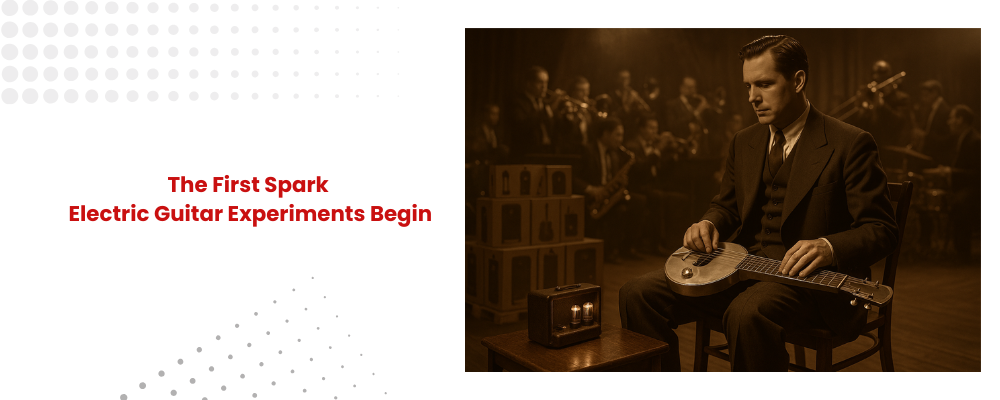
1930s: The First Electric Guitar Experiments
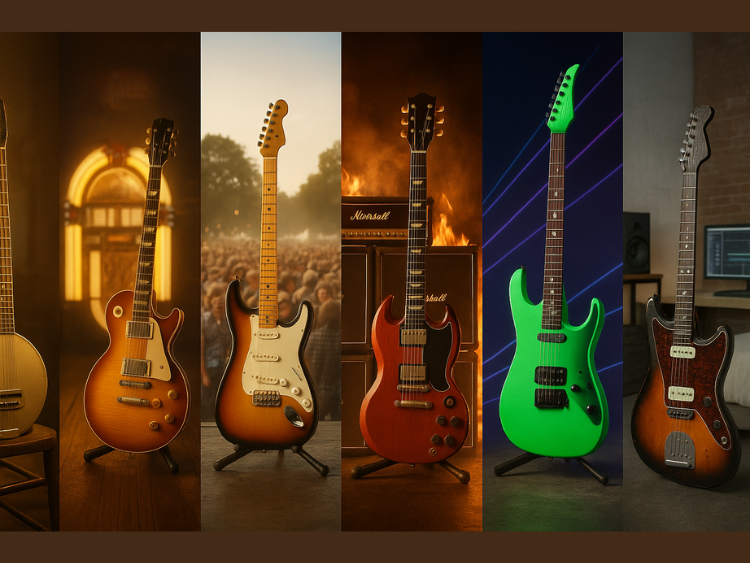
In the 1930s, big bands were growing louder, and acoustic guitars struggled to be heard. The breakthrough came when Rickenbacker introduced the “Frying Pan”, considered the first true electric guitar. Using magnetic pickups, it turned string vibrations into electrical signals that could be amplified.
1940s: Jazz and Blues Embrace Electricity
Jazz and blues musicians quickly adopted the electric guitar. According to the Smithsonian Institution, the instrument’s ability to cut through a band mix allowed guitarists to step into lead roles, shaping the early sound of modern jazz and blues.
1950s: The Rise of Solid-Body Icons
The 1950s saw a revolution in music, driven by electric guitar innovations from Gibson and Fender. The Gibson Les Paul (1952) and Fender Telecaster (1950/1951) introduced solid-body designs, eliminating feedback and offering unprecedented sustain and clarity. The Les Paul became known for its warm, powerful tones, while the Telecaster offered a bright, twangy sound. These guitars, championed by pioneers like Chuck Berry, not only advanced technology but also ignited the rock 'n' roll movement, proving the electric guitar's potential to shape popular music and lay the foundation for future genres.
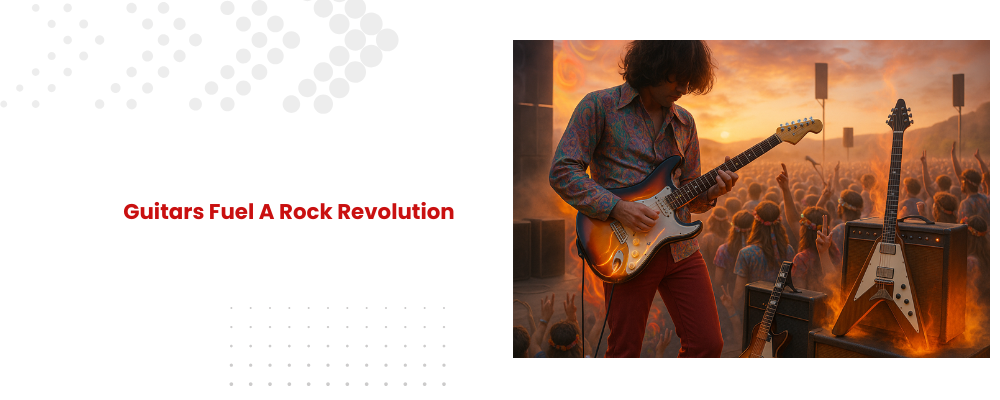
1960s: Rock, Freedom, and New Designs
By the 1960s, the electric guitar had become the sound of freedom and youth. Bands like The Beatles brought guitar-driven music to the world, mixing melody with new recording styles. Eric Clapton showed how the instrument could deliver powerful solos and deep blues tones, inspiring countless players. Then came Jimi Hendrix, who transformed the guitar with feedback, distortion, and bold stage presence. His iconic act of setting his Fender Stratocaster on fire at Monterey became a cultural landmark. Bold designs like the Stratocaster and Gibson Flying V gave players new tones and striking looks, fueling rock’s explosive growth.
1970s–1980s: Heavy Rock and Technology
The 70s and 80s brought humbucker pickups, advanced amps, and pedals, creating the heavy tones of rock and metal. Bands such as Led Zeppelin, Van Halen, and Metallica built genres around these innovations. Effects like distortion, delay, and chorus shaped the era’s sound.
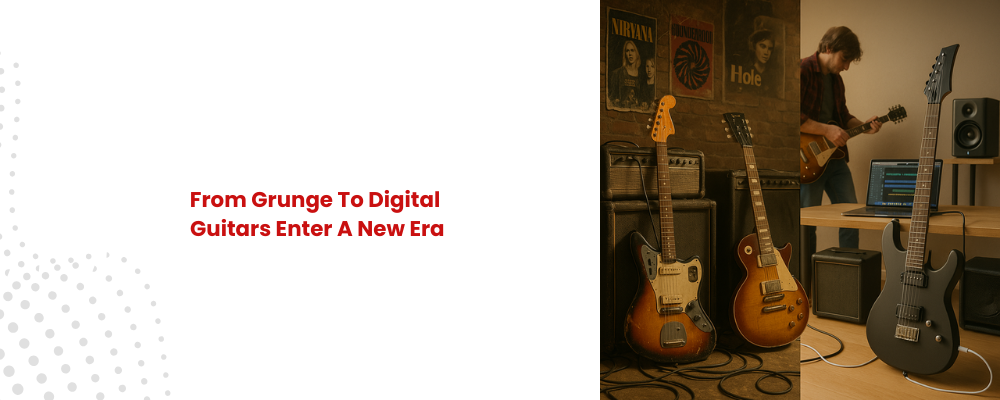
1990s–2000s: Alternative Sounds and Digital Growth
Grunge, indie, and alternative kept the guitar in the spotlight during the 90s and 2000s. At the same time, digital technology expanded possibilities—USB connectivity, lightweight builds, and new pickup designs gave musicians more flexibility than ever.
Today: Innovation Meets Tradition
Today, electric guitars blend tradition with technology. Extended-range 7- and 8-string guitars, built-in effects, and wireless systems coexist with timeless designs like the Stratocaster and Les Paul. The Smithsonian notes that these instruments remain both cultural icons and evolving tools for creativity.
The Cultural Impact
Beyond music, electric guitars became symbols of rebellion, identity, and freedom. From Hendrix at Woodstock to Slash’s legendary solos, the instrument represents not only sound, but also self-expression. Its journey shows why the electric guitar continues to inspire generations worldwide.
Conclusion
The history and evolution of electric guitars is a journey of innovation and passion. From the first amplified models of the 1930s to today’s modern designs, the electric guitar has shaped sound and culture across decades.
Ready to own a piece of this history? Explore the best electric guitars today at MusicShopStore and find the perfect model for your style.
Recent Posts