Headphones vs Studio Monitors: Which One Should You Mix With?
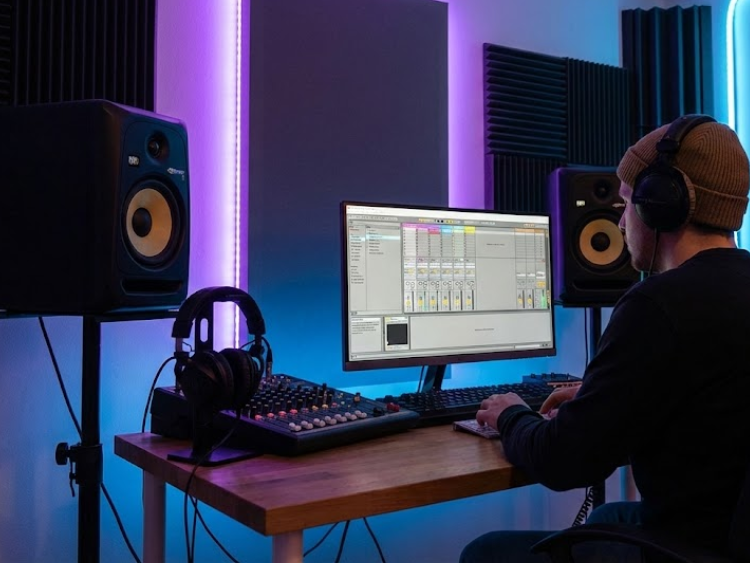
All music producers, engineers, and home studio artists have to answer this question at some point: Should I use headphones or studio monitors to mix? They both belong to music production; however, they are used somewhat differently. A selection of one can have a great influence on the quality and soundness of your blend. We will now examine the advantages and disadvantages of each of them to assist you in coming up with the optimal choice in your setup.
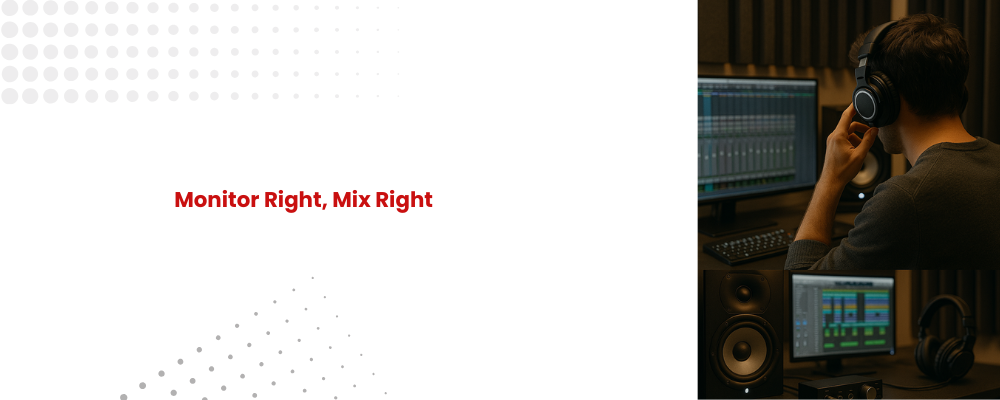
The Role of Monitoring in Mixing
Monitoring music is one of the most important processes in the attainment of a professional mix. The audio engineering research of the Audio Engineering Society (AES) states that the precision of what you are listening to directly influences how much you are able to balance the instruments and shape the frequency, and make your mix actually depth-oriented.
Mixing is about the process of seeking the proper balance between volume, frequency, and stereo image. To do so, you must have an unbiased and accurate listening environment, one that will allow you to listen to your music without coloration or distortion.
The quality of the tools you use to monitor, such as a pair of high-quality studio monitors or a pair of professional mixing headphones, is what defines how accurately your judgment of levels, panning, and tone can be. Misjudged monitoring may give rise to mixes that sound good in one room but are unpleasant in other rooms. Monitors, or reference headphones that are reliable and have a flat response, are useful in ensuring that there is clarity, consistency, and translation in all playback systems, making them important to every serious producer or mixing engineer.
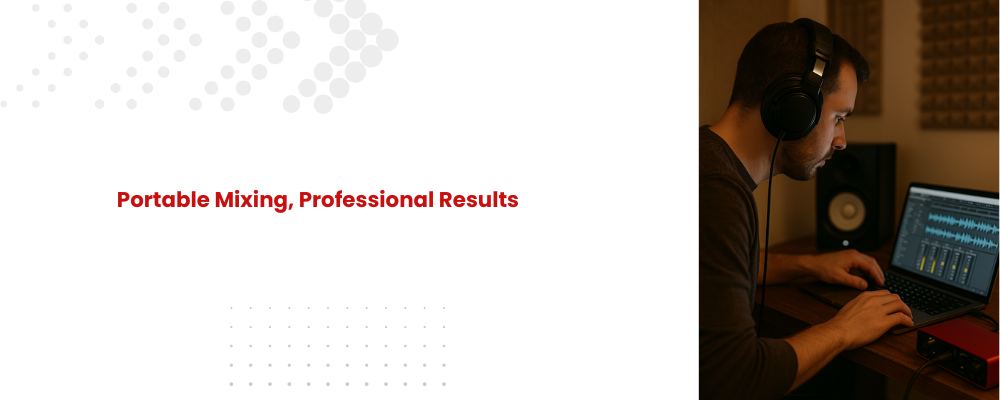
Mixing with Headphones
While headphones excel in precision and flexibility, they work best when paired with another listening method because no single setup reveals the full picture of your mix.
Advantages
Precision in Detail: Headphones offer exceptional clarity and isolation. They reveal micro-details such as background hiss, subtle reverb tails, and minor EQ issues that might be missed on speakers.
Portable and Convenient: Perfect for mixing anywhere — whether you’re in a small room, apartment, or on the go.
No Room Acoustics Issues: Headphones eliminate reflections and reverb caused by untreated rooms. What you hear is the pure signal from your DAW.
Affordable and Easy to Use: Quality headphones are generally cheaper than a good pair of monitors plus acoustic treatment.
Disadvantages
Lack of Spatial Realism: Headphones can exaggerate stereo width and panning, since each ear receives sound directly instead of through the room.
Unnatural Low-End Response: Bass frequencies may sound either too strong or too weak, depending on headphone design.
Ear Fatigue: Extended sessions on headphones can tire your ears quickly and affect judgment.
Best Use Case
Headphones are great for detailed editing, late-night mixing, and checking fine nuances. They’re ideal when your space isn’t acoustically treated.
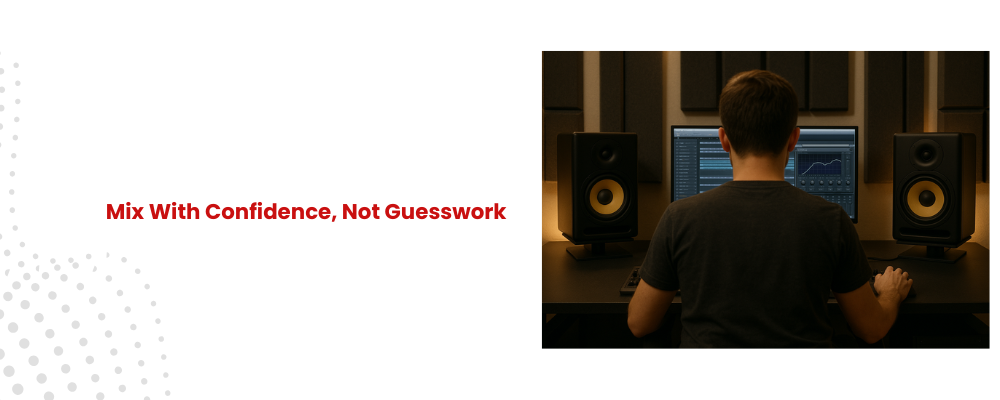
Mixing with Studio Monitors
When you want to hear your mix the way listeners actually will in the real world, studio monitors provide the most accurate and natural playback experience.
Advantages
Natural Soundstage: Monitors simulate real-world listening by allowing sound to travel through air, reflecting off surfaces, and reaching both ears naturally.
Accurate Stereo Imaging: Mixing on speakers helps you understand spatial balance and panning as your audience will hear it.
Better Low-End Control: Larger drivers reproduce bass more naturally, allowing you to mix kick drums and basslines accurately.
Mix Translation: Monitors help ensure your mix sounds balanced across different playback systems — from car speakers to streaming earbuds.
Disadvantages
Room Acoustics Matter: Without proper acoustic treatment, reflections can color your sound, leading to inaccurate mixes.
Higher Cost: You’ll likely need to invest in good monitors and room treatment to get professional results.
Less Privacy: Monitors are not ideal for late-night sessions or shared spaces.
Best Use Case
Studio monitors excel at final mix balancing, panning, and overall tonal decisions, especially in treated rooms.
So, Which One Should You Use?
The honest answer: Use both. Each has its strengths, and combining them gives you a well-rounded perspective of your mix.
Here’s a practical workflow:
Start mixing on monitors to shape the overall tone, stereo field, and dynamics.
Switch to headphones for fine-tuning — check reverb tails, vocal sibilance, and subtle EQ moves.
Go back and forth between both to ensure your mix translates across systems.
This hybrid approach helps you achieve mixes that sound great everywhere.
Tips for Accurate Mixing
Keep volume levels moderate to avoid ear fatigue.
Use reference tracks to compare your mix on both headphones and monitors.
Check your mix on different playback devices — car stereo, Bluetooth speaker, and earbuds.
If your room isn’t treated, consider using room correction software for your monitors.
Conclusion
Both headphones and studio monitors play crucial roles in modern mixing. Headphones give you detail and isolation; monitors provide realism and space. Together, they help you craft mixes that sound professional on every platform. The best tool depends on your workflow, space, and budget — but combining both will always give you the most accurate results.
Ready to Upgrade Your Mixing Setup? Whether you’re looking for studio monitors with flat frequency response or professional mixing headphones, we’ve got you covered. Explore our collection and take your mixes to the next level. Shop Headphones & Studio Monitors Now
Recent Posts